
Microfluidic Device
Precise Evaluation of Drug Efficacy and Toxicity Under In Vivo-Mimetic Control of Oxygen Concentration and pH
Overview
In recent years, concerns about animal welfare have accelerated efforts to reduce animal testing in pharmaceutical and cosmetic development, driving a global shift toward in vitro evaluation methods that better replicate the human body. Microphysiological systems (MPS), which combine microfluidic technology with human cells, are attracting significant attention as next‑generation in vitro evaluation methods capable of reproducing organ‑level physiological functions.
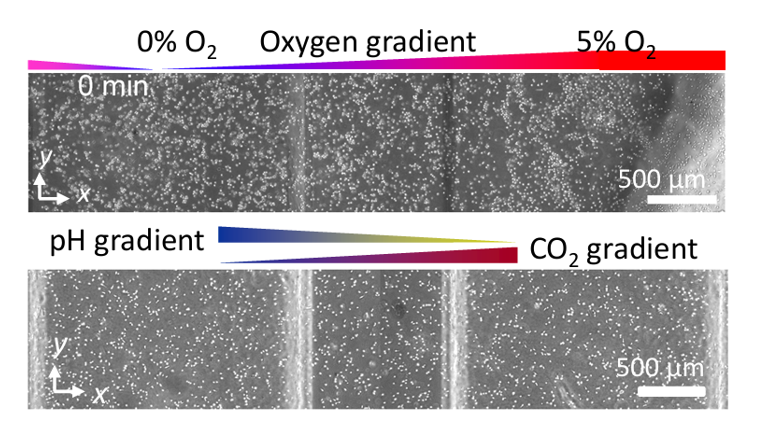
The inventors have developed a device capable of independently controlling the two‑dimensional spatial distributions of both oxygen concentration and pH. This invention is expected to facilitate understanding of cellular dynamics in microenvironments with oxygen and pH gradients. For example, by reproducing the hypoxic and low‑pH environment of cancerous tissues, the device enables the evaluation of anticancer drug efficacy and toxicity under conditions that closely mimic the in vivo environment of cancer patients. Beyond these applications, the device is expected to support a broad range of uses as an organ‑on‑a‑chip platform.
The Device Allows for Control of Oxygen Concentration and pH
Product Application
A variety of applications are envisaged, including:
・Evaluation of anticancer drug efficacy
・Evaluation of vascular permeability of microvessels
・Evaluation of drug permeability through blood–brain barrier (BBB)
IP Data
IP No. : JP2025-177497
Inventor : FUNAMOTO Kenichi
keyword : Microfluidic Device, Microphysiological system, MPS, Organ-on-a-Chip